Block paving driveways, paths and patios from £180 per m². Hard-wearing, repairable, and laid on a base built for British weather.
We are DNA Driveways Coventry, the driveway and paving side of DNA Landscapes, and a Tobermore registered contractor. We lay block paving in any colour, size or pattern, from a plain drive to borders and inlays, and we bed our block paving on clean granite chippings rather than sharp sand.
Recent work
Bradstone Rumbled block paving in charcoal, laid in mixed sizes across the frontage and down the side of the bungalow, with a brick-edged step to the front door. See the whole job, including the patio, on our Binley Woods page.
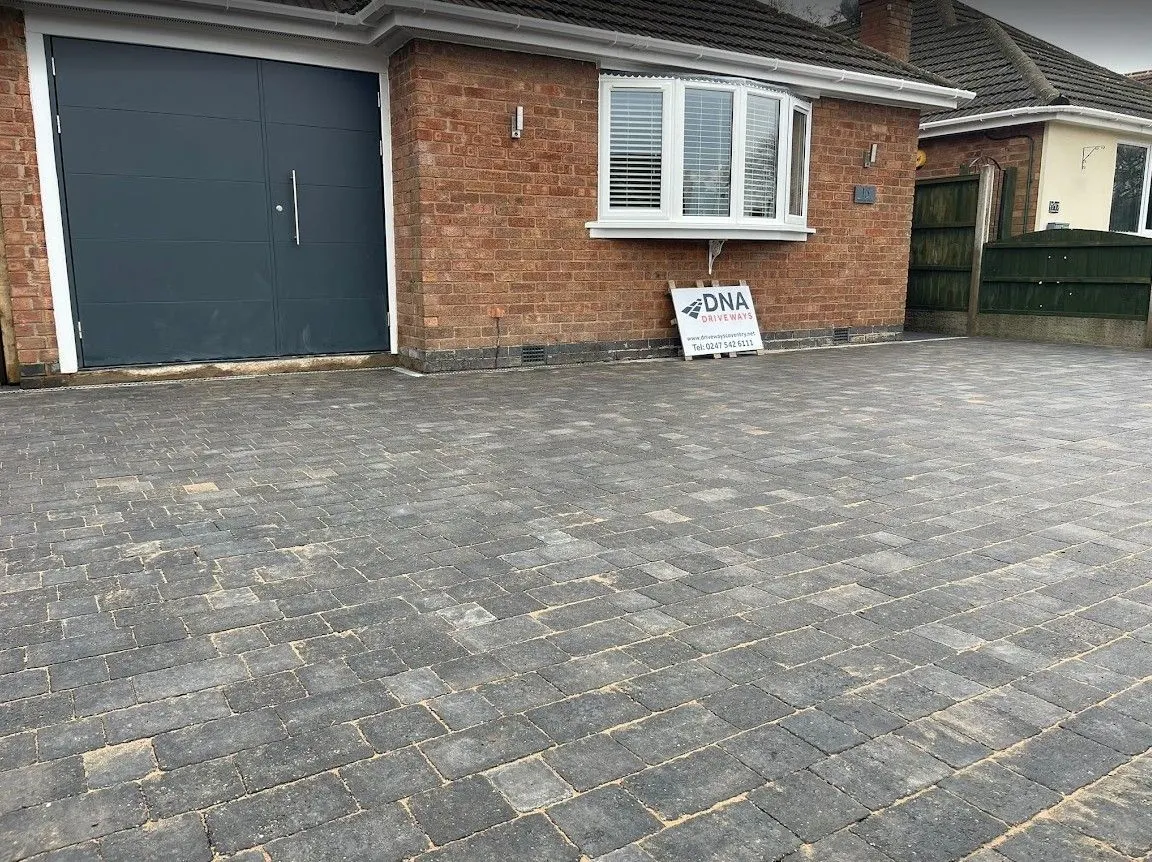
Bradstone Rumbled charcoal, mixed sizes
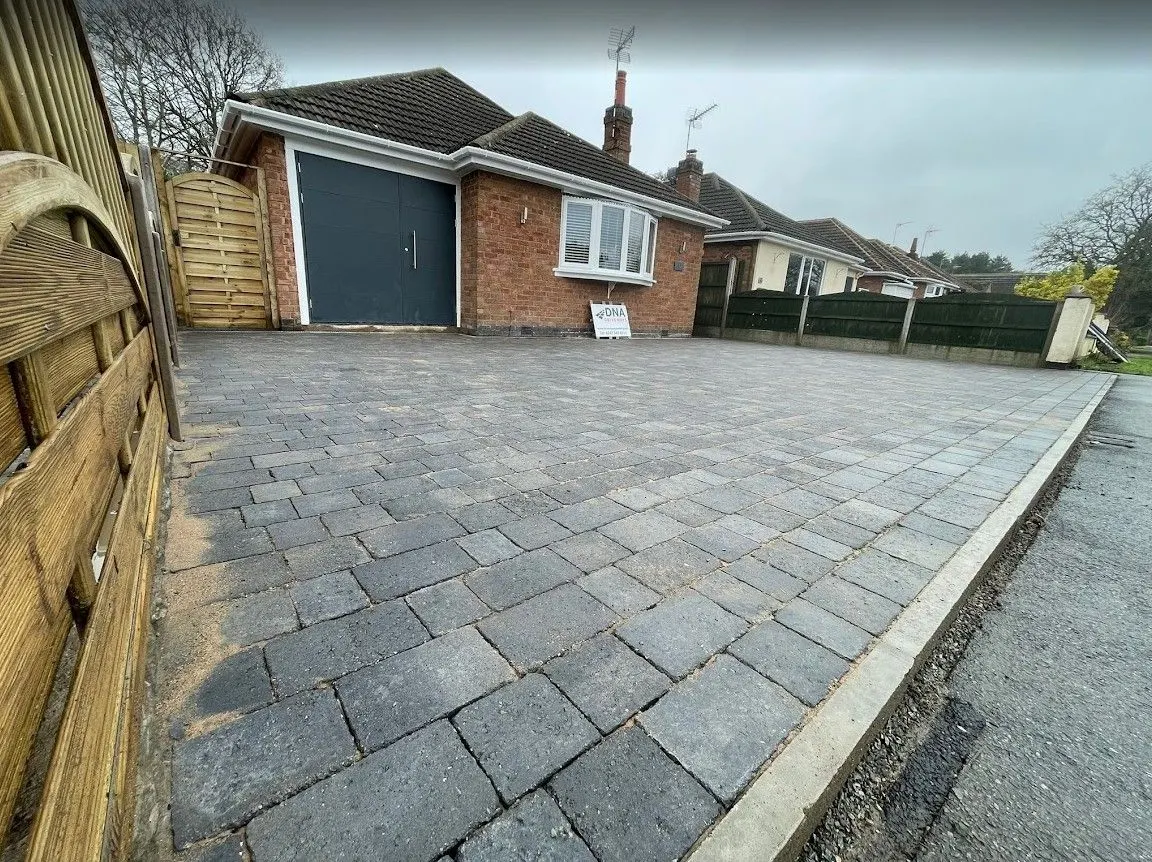
Laid to a kerb edge along the boundary
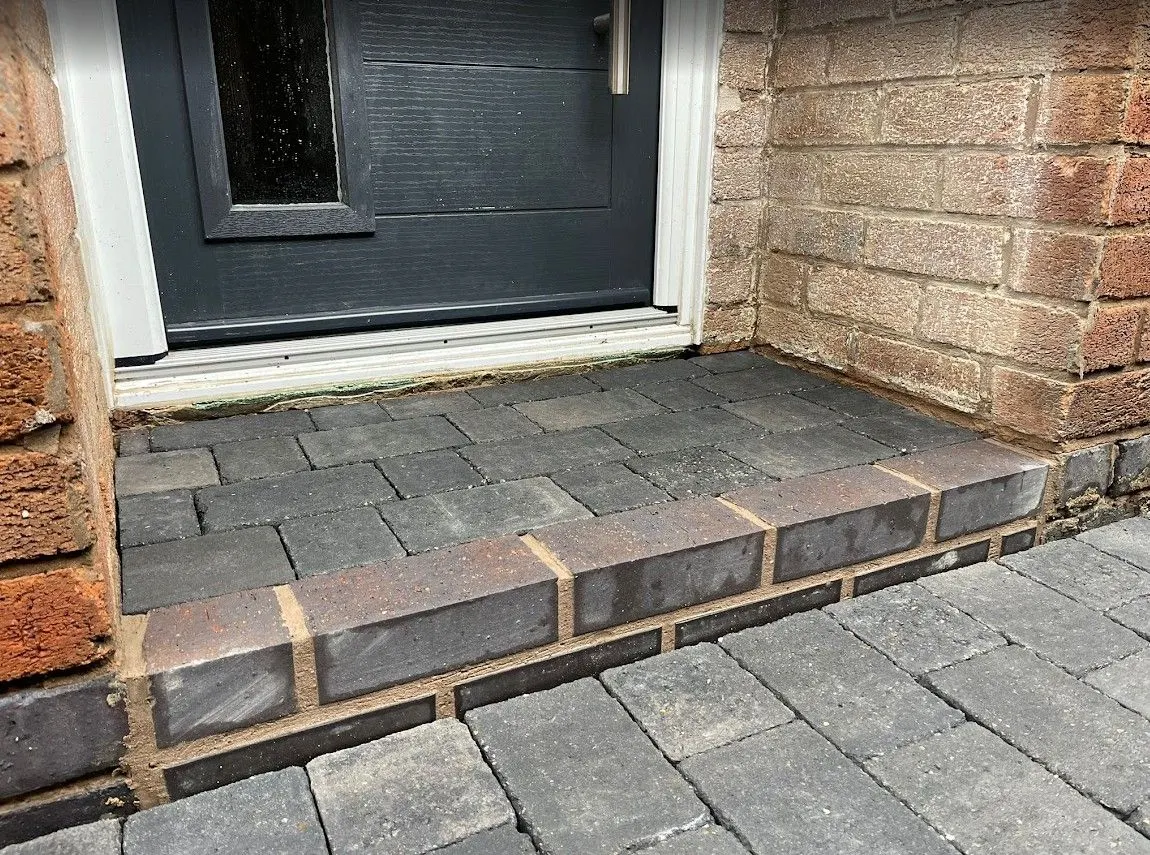
Brick-edged step to the front door
What goes underneath
Most block paving is bedded on sharp sand. We switched to clean 6mm granite chippings a few years ago, and in the video below Andy explains why on the Binley Woods job.
It is a slightly more expensive material, but losing fewer days to the weather more than makes up for it. Underneath the chippings sits a compacted crushed-stone sub-base, dug deeper where the ground or the vehicles call for it, and fixed edging holds the whole surface in place.
Andy on site in Binley Woods, explaining the granite chipping laying course
Patterns and borders
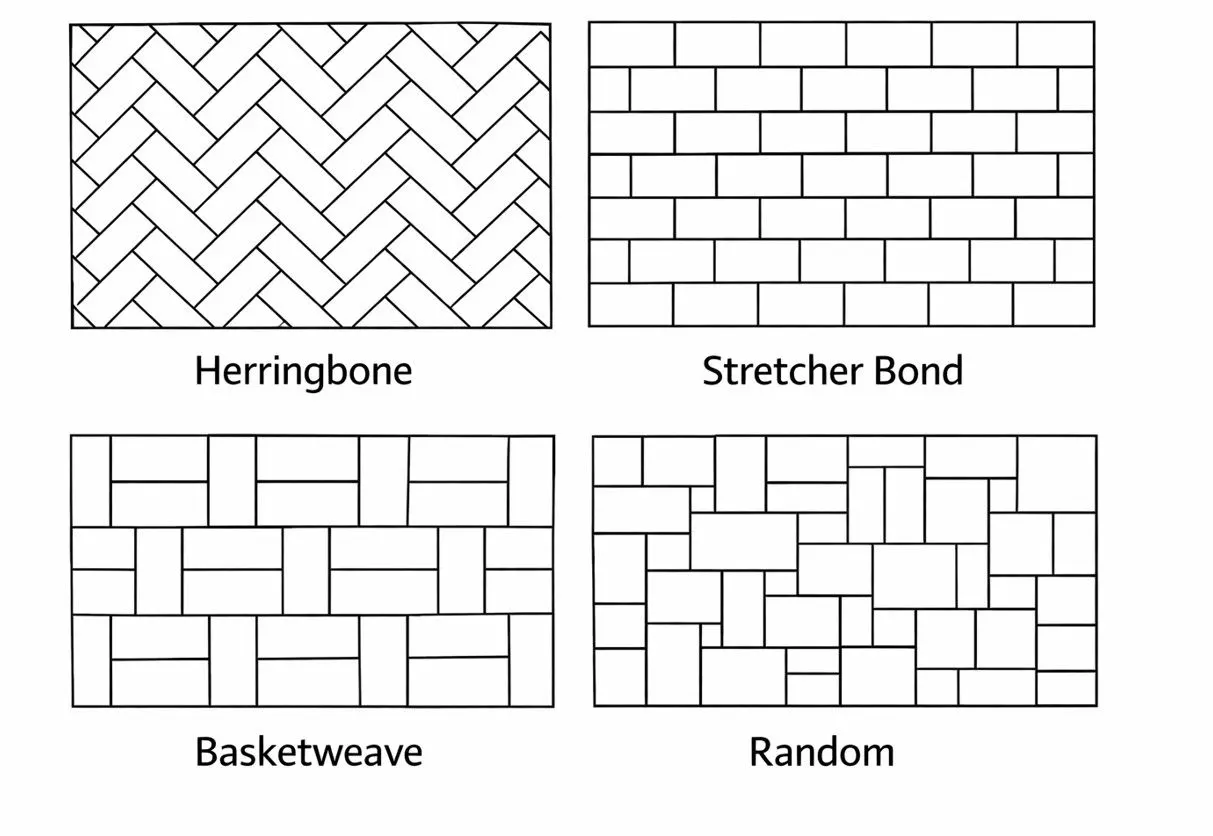
Herringbone
The strongest pattern for a driveway, because the blocks interlock in two directions and resist cars turning and braking.
Stretcher bond
Rows like brickwork. Clean and simple, and good for paths and patios.
Basketweave
Pairs of blocks laid at right angles, for a traditional look on lighter-use areas.
Random
Mixed sizes laid without a repeating pattern, like the Bradstone Rumbled drive above.
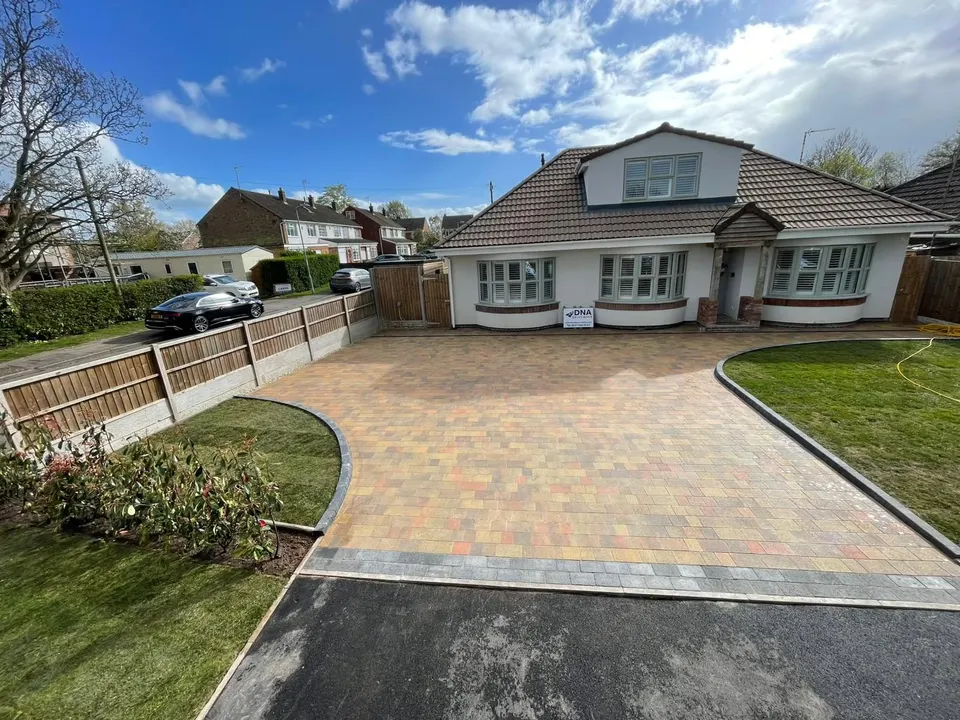
A contrasting border, like the charcoal edge on the drive at the top of this page, frames the drive and costs very little extra. Inlays such as diamonds or circles in a second colour are possible too, and we have laid words, numbers and even pet shapes. Just bear in mind that the next owner of the house may not share your love of the dog.
Choosing blocks
Drainage
Aftercare
For the first few weeks, only sweep it. The jointing sand needs time to settle, and jet washing too early blows it out of the joints, leaving gaps for weeds and moss. Once it has settled, a stiff brush and warm soapy water keep it clean.
If it needs a deeper clean, a pressure washer is fine, as long as you brush fresh kiln-dried sand into the joints straight afterwards. Treating the joints for weeds once a year and topping up the sand every two or three years keeps it tight. Sealing is optional, but it makes oil stains easier to deal with. And if a block ever cracks, it can be lifted and replaced on its own.
Questions
© 2026 All Rights Reserved | DNA Landscapes (Coventry) Ltd Trading as DNA Driveways Coventry - Company Reg. 15642463

Founded by Andy Lyden groundwork specialist since 2008